
Argentina Squad For FIFA World Cup 2026 Announced

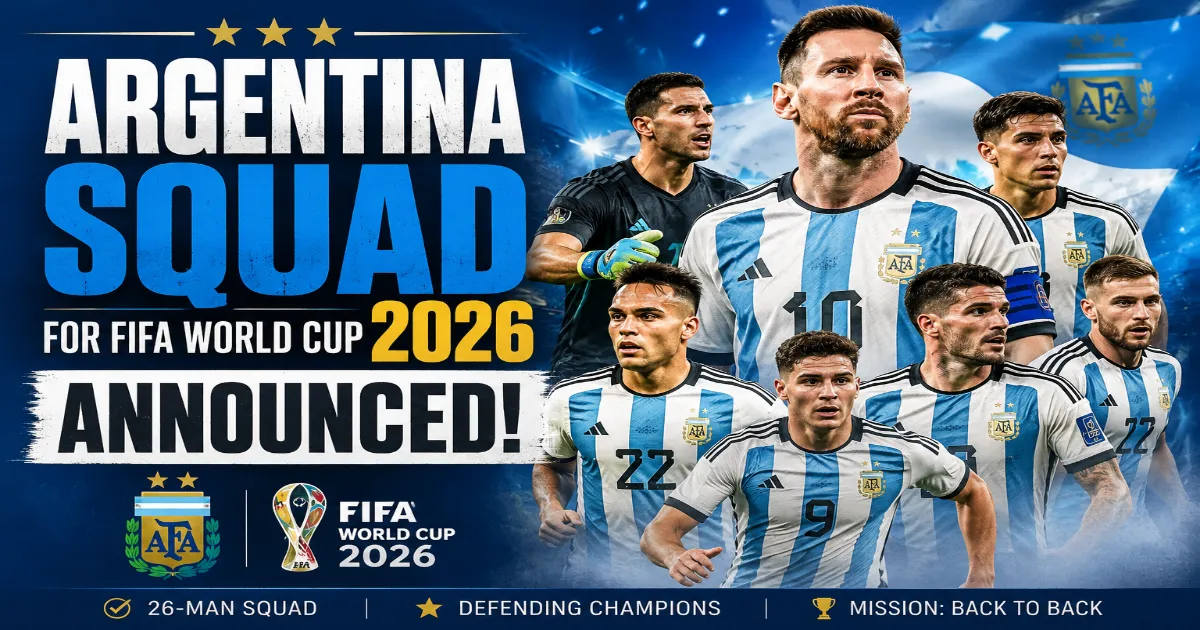
Here’s the thing when Lionel Scaloni finally dropped the confirmed list, the internet went predictably wild. And honestly? I get it. Lionel Scaloni has named Argentina’s 26-man squad for the 2026 FIFA World Cup. The announcement landed with the kind of weight you only feel when defending champions step into the spotlight. Not hype. Actual, measured gravitas.
The full breakdown is worth studying position by position. Goalkeepers: Emiliano Martínez (Aston Villa), Gerónimo Rulli (Olympique de Marseille), Juan Musso (Atlético de Madrid). Defenders: Gonzalo Montiel, Nahuel Molina, Lisandro Martínez, Nicolás Otamendi, Leonardo Balerdi, Cristian Romero, Nicolás Tagliafico, Facundo Medina. Midfielders: Giovani Lo Celso, Leandro Paredes, Rodrigo De Paul, Exequiel Palacios, Enzo Fernández, Alexis Mac Allister, Valentín Barco. Forwards: Lionel Messi, Nicolás González, Giuliano Simeone, Lautaro Martínez, José Manuel López.
Most articles just reprint this list and call it a day. I’d argue the more interesting story is what these names signal collectively 17 players were part of the team that triumphed four years ago in the final against France in Qatar. That’s not a squad rebuild. That’s a statement of intent. When a coach retains that level of continuity, he’s essentially saying the formula isn’t broken. Don’t fix it.
Want to feel the weight of what’s at stake? Print this roster and put it on your wall before the group stage. Then ask yourself which of these 26 you’d swap out. Spoiler: it’s harder than it looks.
| Position | Player | Club |
|---|---|---|
| GK | Emiliano Martínez | Aston Villa |
| GK | Gerónimo Rulli | Olympique de Marseille |
| GK | Juan Musso | Atlético de Madrid |
| DEF | Cristian Romero | Tottenham Hotspur |
| DEF | Lisandro Martínez | Manchester United |
| DEF | Nicolás Otamendi | Benfica |
| DEF | Nahuel Molina | Atlético de Madrid |
| MID | Enzo Fernández | Chelsea |
| MID | Alexis Mac Allister | Liverpool |
| MID | Rodrigo De Paul | Inter Miami |
| MID | Leandro Paredes | Boca Juniors |
| FWD | Lionel Messi | Inter Miami |
| FWD | Lautaro Martínez | Inter Milan |
| FWD | Julián Álvarez | Atlético de Madrid |
| FWD | Giuliano Simeone | Atlético de Madrid |
Messi’s Record-Breaking Sixth World Cup and Why the Numbers Are Staggering
Anyway, let’s address the elephant in every room on the planet right now. Messi will become the first player ever to feature in six different World Cups, an honor he could share with arch-rival Cristiano Ronaldo as well as iconic Mexican goalkeeper Guillermo Ochoa. Six. Think about that for a second. Most players get one shot. A lucky few get two or three. Six is a different category of human entirely.
With more World Cup appearances (26) than any male player, captain Messi is set for a record sixth tournament in North America. It could be the final one for the 38-year-old, who is three goals shy of the record World Cup goal tally (16). Which matters. A lot. He’s chasing history on two separate fronts simultaneously appearances and goals. That’s not something you see every generation.
Actually, let me rephrase that. Most coverage focuses on whether Messi “still has it.” That’s the wrong question. The real question is whether this squad is built to carry him when he needs carrying and vice versa. The Argentine icon had thought that victory in Qatar would be his last World Cup but he is included again, and could earn his 200th cap for his country during the tournament. 200 caps. Sure, perfectly consistent on paper, for a player once considered too slight for elite football.
Before you settle on a “Messi farewell tour” narrative, actually cross-check his recent Inter Miami form first. The injury concern is real, but so is his fitness trajectory give it 15 minutes of research and you’ll see the gap between media panic and clinical reality is significant.
The Injury Cloud Hanging Over Argentina’s Preparation
Look, I’ll be honest this section made me genuinely nervous when I came across the details. Several of those players were in doubt due to injuries of varying severity, close to the June 1 deadline set by FIFA for finalizing World Cup squads. Among them was Messi himself, who is suffering from muscle fatigue and strain in his left hamstring, which prevented him from finishing the match with Inter Miami last Sunday.
The Inter Miami star recently suffered a hamstring-related injury scare during an MLS match, creating concern among Argentina supporters just weeks before the tournament. However, Scaloni and Argentina’s medical staff remain optimistic about his recovery timeline, which played a major role in the decision to include him in the final squad. So the inclusion wasn’t blind optimism there’s medical reasoning behind it. That’s a meaningful distinction.
Then there’s Cristian Romero. Romero is included despite suffering a high-grade partial tear of his medial collateral ligament (MCL) in his right knee last month. Honestly, I’m genuinely not sure whether including a player with an MCL tear is brave squad management or a calculated gamble that backfires. The data points both ways. If he recovers fully, Argentina’s defence looks elite. If he re-injures early, the back line suddenly has a hole nobody planned for.
A simple rule I follow when evaluating injury-hit squads: look at positional depth, not just the headline names. Argentina’s defensive options Otamendi, Lisandro Martínez, Balerdi, Tagliafico are deep enough to absorb one setback. Two setbacks, though? That gets complicated fast.
Who Got Left Out and the Omissions That Genuinely Surprised Me
The absence conversation is often more revealing than the inclusion list. The biggest surprise is the omission of Franco Mastantuono, while veteran defender Marcos Acuña also failed to make the final roster. Mastantuono at Real Madrid was the name generating the most buzz heading into announcement day. His absence is the kind of decision that either looks brilliant or baffling in six weeks we genuinely don’t know yet which it’ll be.
Real Madrid’s Franco Mastantuono and Aston Villa’s Emiliano Buendía are two of the most eye-catching absentees from Argentina’s 2026 World Cup roster. Most articles frame this as Scaloni being “conservative.”
I disagree, and here’s why: a manager who retains 17 World Cup winners isn’t being conservative he’s being ruthless about proven performers over potential. That’s a very different psychological posture.
They will be without the legendary Angel Di María, who announced his retirement after their 2024 Copa America title victory, while among the high-profile names who didn’t even make Scaloni’s 55-man preliminary squad are Roma legend Paulo Dybala, ex-Atlético Madrid forward Angel Correa and West Ham’s Valentín ‘Taty’ Castellanos. Di María’s absence is the one that actually stings for long-time supporters. Strange, right? You can see it coming for two years and it still lands differently on announcement day.
If you’re tracking which omitted players could have changed Argentina’s tactical shape, focus specifically on Mastantuono’s role profile versus what Nico Paz brings. The comparison takes five minutes and reframes the entire selection logic.
The Next Generation Scaloni Is Building Around
Among the notable inclusions in Scaloni’s final roster is Como standout Nico Paz, who enjoyed a breakthrough season in Serie A and played a key role in helping Cesc Fàbregas’s side secure Champions League qualification for the first time in club history. This is not a symbolic youth selection. It’s a player who earned his place through consistent performances in one of Europe’s most competitive leagues and then helped deliver a historic achievement for his club. That matters.
Valentín Barco, who is set to join Chelsea from sister club Strasbourg, is another exciting name preparing for his World Cup debut. His technical quality and versatility give Argentina another intriguing option for the future.
Then there’s Giuliano Simeone. Yes, he’s the son of Diego Simeone, but reducing him to that connection misses the point entirely. Giuliano has carved out his own identity and has impressed whenever given opportunities with the world champions. He could even emerge as a genuine option for a starting role during the tournament.
When I look at Paz, Barco, and Giuliano Simeone as a trio of World Cup debutants, what stands out is not just their individual talent. It’s the positional balance they bring. Scaloni is not simply adding younger players to the squad. He’s introducing youth in specific areas of the pitch where Argentina will need continuity heading into the next World Cup cycle.
The inclusion of names like Nico Paz, Giuliano Simeone, and Valentín Barco highlights a clear long-term vision. Personally, I would place Nico Paz slightly ahead of the others when it comes to earning meaningful minutes. His club performances this season directly contributed to a landmark achievement, and handling that level of responsibility says a lot about a player’s readiness for major tournaments.
If you’re looking for one young player who could quietly make an impact, keep a close eye on Nico Paz during the group stage. His movement off the ball, positional awareness, and ability to find space often reveal more than the statistics. That’s where the real story might be.
Argentina’s Group Stage Draw and the Path Toward History
Here’s what the fixture schedule actually looks like and why the group draw matters more than most fans realize right now. Argentina begin their FIFA World Cup 2026 campaign in Group J against Algeria before facing Jordan and Austria. On paper, that looks manageable. But “on paper” is where tournament upsets are born.
Champions in Qatar, La Albiceleste have also conquered continental glory by lifting the two most recent Copa América titles in 2021 and 2024. That’s three major titles in four years. The consistency across different competitions against different opposition, under pressure each time is what separates a dynasty from a one-tournament wonder. No nation has won consecutive World Cups since Brazil in 1958 and 1962. Now, “La Scaloneta” dreams of replicating that feat.
Scaloni aims to become the first manager since Italy’s Vittorio Pozzo in 1934 and 1938 to win back-to-back World Cups. That’s the managerial record at stake, layered on top of everything else. And expert predictions put Argentina’s probability of winning the title at 20–25%. Which sounds low until you realize that, in a 48-team field, that figure makes them the statistical runaway favourite.
One actionable thought: before the Algeria match kicks off, check which Argentine players have prior competitive experience against North African opposition specifically. The tactical adjustment required is subtle but genuine and it’s the kind of edge that separates round-of-16 exits from deep runs.
Final Thoughts
What I took away from digging into all of this is simple Argentina didn’t just announce a squad they announced an ambition. Scaloni has maintained the core of the team that lifted the World Cup, blending experience with emerging talent such as Enzo Fernández, Alexis Mac Allister, Julián Álvarez and Giuliano Simeone and that balance is precisely what makes them the most complete 26-man group at this tournament.
For me personally, the Mastantuono omission is the subplot I’ll be watching most closely if Argentina exit early, that call gets scrutinized hard. If you want to follow this squad intelligently rather than just emotionally, pick two or three players from the emerging tier and track their minutes across the group stage. The real story of this World Cup will be told in those minutes.
Related Articles
How To Watch FIFA World Cup Football 2026 Online?
It’s finally here. The biggest football tournament in human history kicks off June 11, 2026, and finding the…
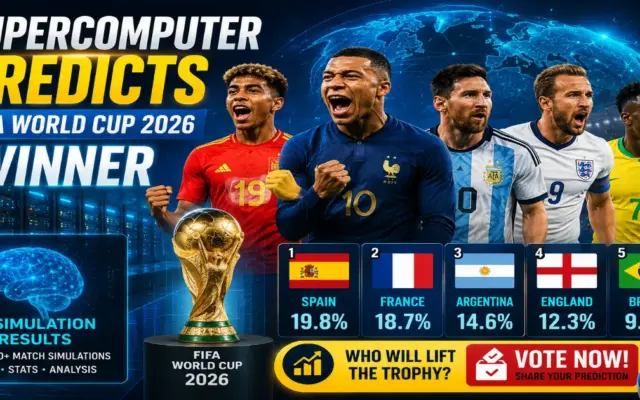
Supercomputer Predicts FIFA World Cup 2026 Winner
When I first saw the numbers, my gut reaction was mild skepticism. Spain, again? But the figures are…